
Before your exam
Here you will find information on specifications, syllabus, music, uniform, and everything you need to know to prepare for taking an RAD exam.
Exams overview
| Name of award | What? | Who? | Assessed? | Where? |
|---|---|---|---|---|
| Demonstration class (Dance to Your Own Tune) | Free content, led by teacher | Candidates age 2.5 to 5 years | No, the examiner only observes | AEC or RAV |
| Solo performance award (Grades 1-7) | 3 solo dances, at least 2 from exam syllabus | From age 7 | Yes, as per award criteria | AEC or RAV |
| Class award (Pre-Primary in Dance to Grade 8 and Discovering Repertoire) | Class award syllabus (a selection of exercises and one dance), led by the teacher | From age 5, Discovering Repertoire from age 12 | Yes, a broad indication of standard rather than a detailed breakdown | AEC or RAV |
| Examination (Graded, Vocational and Discovering Repertoire) | Candidates perform the exam syllabus | From age 6, Discovering Repertoire from age 12 | Yes, as per exam criteria | AEC or RAV |
| Solo Seal | Candidates perform three variations and a virtuoso finale for a panel of judges and an audience | From age 15 | Yes, by an RAD examiner and a dance professional approved by the Artistic Director | RAV or theatre venue |
*AEC – Approved Examination Centre, normally the teacher’s own studio
*RAV – RAD Approved Venue, premises provided by the RAD.
Our exams glossary explains other terms that you may not be familiar with.
Specifications and syllabus
From January 2026, the Specifications have been updated and reorganised into three separate documents to make them easier to navigate:
This document is a practical guide for teachers and schools to organise and run RAD examinations smoothly and safely. It covers who can enter, how to register, what ages and requirements apply, how to book and prepare for exams, payment processes, what happens on the exam day, and how and when results and certificates are issued. It also provides guidelines for the set up of exam studios, music, uniform, filming options, fees, refunds, and what to do if exams need to be changed or cancelled.
This document provides detailed information about the content and format for RAD Exams, Class Awards and Solo Performance Awards. It describes what each level includes, how to group candidates, how old students must be, how long each exam lasts, and the examination assessment criteria. It outlines the skills required for every grade, explains how students are assessed and what they are awarded upon the completion of the qualification.
This document explains how RAD exams are recognised, structured, and regulated across the UK. It outlines what the learning outcomes are, how the exams fit into national qualification frameworks, recommended study hours for each grade, and how they can support further education or dance related careers.
Music
More information on music in exams can be found in our Specifications (see Music), and CDs and sheet music can be bought from the RAD New Zealand shop.
Please note: for graded exams, it is better if the teacher does not serve as the pianist or operate the CD player as this can be very distracting for the candidates.
We suggest the following:
- A screen should be placed between the performing space and the CD operator.
- The CD operator should sit with their back towards the exam area, or facing away from the candidates, making no eye contact with the candidates.
- Candidates should understand beforehand that the examiner will conduct the exam and even if their teacher is operating the CD player, their teacher will not assist at any point.
All vocational graded exams must be performed with a pianist, but the variations are performed to the orchestral tracks on the CD. The pianist must operate the CD player.
Exam fees and refunds
Fees for AEC examinations are less than for RAV examinations where the RAD supplies the venue and pianist
If a student wants to sit an Advanced Foundation, Advanced 1, Advanced 2 or Solo Seal exam wishes to take advantage of the reduced exam entry fee they must ensure that membership application form and payment of the membership fee is processed and sent to the RAD Wellington office at least 21 days prior to the closing date of the examination session they are wanting to enter into.
IMPORTANT INFORMATION – Changes and Additions to Exam Entries
2026 Fee table (all fees are in NZD and GST inclusive)
| Examination | AEC | RAV | ||
|---|---|---|---|---|
| Primary in Dance | $81 | $111 | ||
| Grade 1 | $90 | $120 | ||
| Grade 2 | $103 | $133 | ||
| Grade 3 | $115 | $145 | ||
| Grade 4 | $124 | $154 | ||
| Grade 5 | $135 | $165 | ||
| Grade 6 | $141 | $171 | ||
| Grade 7 | $145 | $175 | ||
| Grade 8 | $151 | $181 | ||
| Discovering Repertoire Level 2 (per unit) | $67 | $97 | ||
| Discovering Repertoire Level 3 (per unit) | $84 | $114 | ||
| Discovering Repertoire Level 4 (per unit) | $89 | $119 | ||
| Intermediate Foundation | $192 | $222 | ||
| Intermediate | $205 | $235 | ||
| Member | Non-member | Member | Non-member | |
| Advanced Foundation | $208 | $415 | $238 | $445 |
| Advanced 1 | $211 | $418 | $241 | $448 |
| Advanced 2 | $216 | $425 | $246 | $453 |
| *Solo Seal | n/a | n/a | $302 | $509 |
| Class Award | AEC | RAV |
|---|---|---|
| Pre-Primary in Dance | $59 | $89 |
| Primary in Dance | $65 | $95 |
| Grade 1 | $70 | $100 |
| Grade 2 | $81 | $111 |
| Grade 3 | $92 | $122 |
| Grade 4 | $99 | $129 |
| Grade 5 | $108 | $138 |
| Grade 6 | $110 | $140 |
| Grade 7 | $113 | $143 |
| Grade 8 | $120 | $150 |
| Discovering Repertoire Level 2 (per unit) | $44 | $74 |
| Discovering Repertoire Level 3 (per unit) | $52 | $82 |
| Discovering Repertoire Level 4 (per unit) | $62 | $92 |
| Solo Performance Award | AEC | RAV |
|---|---|---|
| Grade 1 | $63 | $93 |
| Grade 2 | $71 | $101 |
| Grade 3 | $80 | $110 |
| Grade 4 | $88 | $118 |
| Grade 5 | $94 | $124 |
| Grade 6 | $102 | $132 |
| Grade 7 | $110 | $140 |
| Demonstration Class | AEC | RAV |
|---|---|---|
| Level 1 or Level 2 | $32 | $42 |
| Minimum Fee | AEC | RAV |
|---|---|---|
| Minimum fee payable if examining time less than three hours | $2000 | n/a |
| Surcharges | |
|---|---|
| Admin Fee | $70 |
| Exam Day Admin Fee | $140 |
| Late entries – week 1 | 10% |
| Late entries – week 2 | 20% |
| Replacements | |
|---|---|
| Certificates | $46 |
| Medals/bars | $26 |
| Customer Services | |
|---|---|
| Result Enquiry Report | $83 |
| Appeal | $141 |
| Solo Seal | |
|---|---|
| *Including rehearsals and exam | $60 |
| Exams Feedback Seminar | Members | Non-members |
|---|---|---|
| Attendance fee from 1 August 2023 | $60 | $70 |
Policies and Guidelines
For a breakdown of all our exams policies, please visit the page linked below.
Timings and sets
For a breakdown of Exam timings for Graded, Vocational, and Discovering Repertoire exams, please view this document.
Session dates
For a breakdown of session dates by city/region, please visit this page.
NZ Entry Forms
From January 2020 all AEC and RAV exam entries are to be processed on the new Online Exam entry system. Access to this is through your Members’ Area login. Please contact the office if you require any assistance with this.
Prerequisites and age requirements
Exam prerequisites
| Exam | Prerequisite |
|---|---|
| Intermediate Foundation | None |
| Intermediate | None |
| Advanced Foundation | Intermediate |
| Advanced 1 | Intermediate |
| Advanced 2 | Advanced 1 |
| Solo Seal | Advanced 2 (Distinction) |
Equivalent ballet qualifications from the following organisations are accepted:
- British Ballet Organisation (BBO/bbodance)
- British Theatre Dance Association (BTDA)
- National Association of Teachers of Dance (NATD)
- Imperial Society of Teachers of Dancing (ISTD)
- International Dance Teachers’ Association (IDTA)
Where candidates enter for an exam and the prerequisite in the same session, the award of the exam will be dependent on the prerequisite also being passed.
For more information, please see ‘Entering candidates for exams’ in our Specifications.
Age requirements
An RAD Registered teacher will identify when a candidate is ready to take an exam.
For demonstration classes, the following target ages apply:
| Level | Target age |
|---|---|
| Level 1 | 2½ – 3½ |
| Level 2 | 3½ – 4½ or 5 |
There are recommended age requirements for all RAD exams, class awards and solo performance awards and required ages for Intermediate Foundation, Intermediate and Discovering Repertoire exams and class awards.
Without exception, candidates must reach the required minimum age by 31 December in the year in which they are taking the exam.
| Level | Minimum age | Recommended | Required |
|---|---|---|---|
| Pre-Primary in Dance | 5 | ✔ | |
| Primary in Dance | 6 | ✔ | |
| Grades 1-5 | 7 | ✔ | |
| Grades 6-8 | 11 | ✔ | |
| Intermediate Foundation | 11 | ✔ | |
| Intermediate | 12 | ✔ | |
| Advanced Foundation | 13 | ✔ | |
| Advanced 1 | 14 | ✔ | |
| Advanced 2 | 15 | ✔ | |
| Solo Seal | 15 | ✔ | |
| Discovering Repertoire | 12 | ✔ |
Filmed exams
Filmed exams were introduced to offer an alternative for teachers and students wishing to enter exams during the COVID-19 global pandemic when live exams were not possible.
Filming of exams will continue to be offered.
For assistance or more information
For more information, as well as guides for filming and uploading filmed exams, please visit the Members’ Area.
Special Examinations
Special examinations can be arranged for dates outside the sessions listings above. They are subject to a surcharge which reflects the additional costs (see below).
Please note, the RAD cannot guarantee to fulfil requests which depend on examiner availability.
| Additional Fees | Fee |
|---|---|
| Special Fee | $480 |
| Each additional consecutive day of exams | $80 |
For teachers wishing to arrange examinations for dates outside the sessions listed on our dates page.
Reasonable adjustments
Overview
A Reasonable Adjustment is a pre-assessment adjustment made to enable a disabled or disadvantaged candidate to demonstrate their knowledge, skills, and understanding to the levels of attainment required by the specification for that qualification. They are intended to support candidates with certain conditions (normally a special educational need, disability or medical condition) known about at the time of entry. Reasonable Adjustments involve changes to assessment or administrative procedures only. The assessment criteria and mark will not be adjusted.
Where a Reasonable Adjustment is not necessary, but the candidate does have a condition that they would like the examiner to be aware of, we will inform the examiner. This is known as Examiner Awareness. Further information and guidance on this can be found in the Reasonable Adjustments vs Examiner Awareness guidance document.
Application procedure
Applications for Reasonable Adjustments or requests for Examiner Awareness should be submitted via the RAD Online Exam Entry by activating the RA check box when you add your candidate. Alternatively, if your candidate has been added to the Exam Entry already, you may submit your application by using the pencil icon to the far right of the relevant candidate and activating the RA check box (new window opens) to select ‘Reasonable Adjustment’ or ‘ Examiner Awareness’ on the Exam Entry. Once the RA check box has been activated, please ensure that your application form is uploaded to the notes section of the Exam Entry.
Application or request timelines
Live in-person assessments – Any Reasonable Adjustment application or Examiner Awareness request must be completed by the closing date of the relevant assessment period ideally, but no later than 5 working days before the date of the assessment. All applications after the closing date of the entry should be submitted to examscustomerservices@rad.org.uk
Filmed assessments – Any Reasonable Adjustment application or Examiner Awareness request must be completed no later than 5 working days prior to the filming of the assessment.
- Please read the Reasonable Adjustments policy and procedure before you complete your Reasonable Adjustment Application Form or Examiner Awareness Request Form
- Please find the RAD Examinations Privacy Policy
- Forms should not be given to the examiner on the day of the assessment.
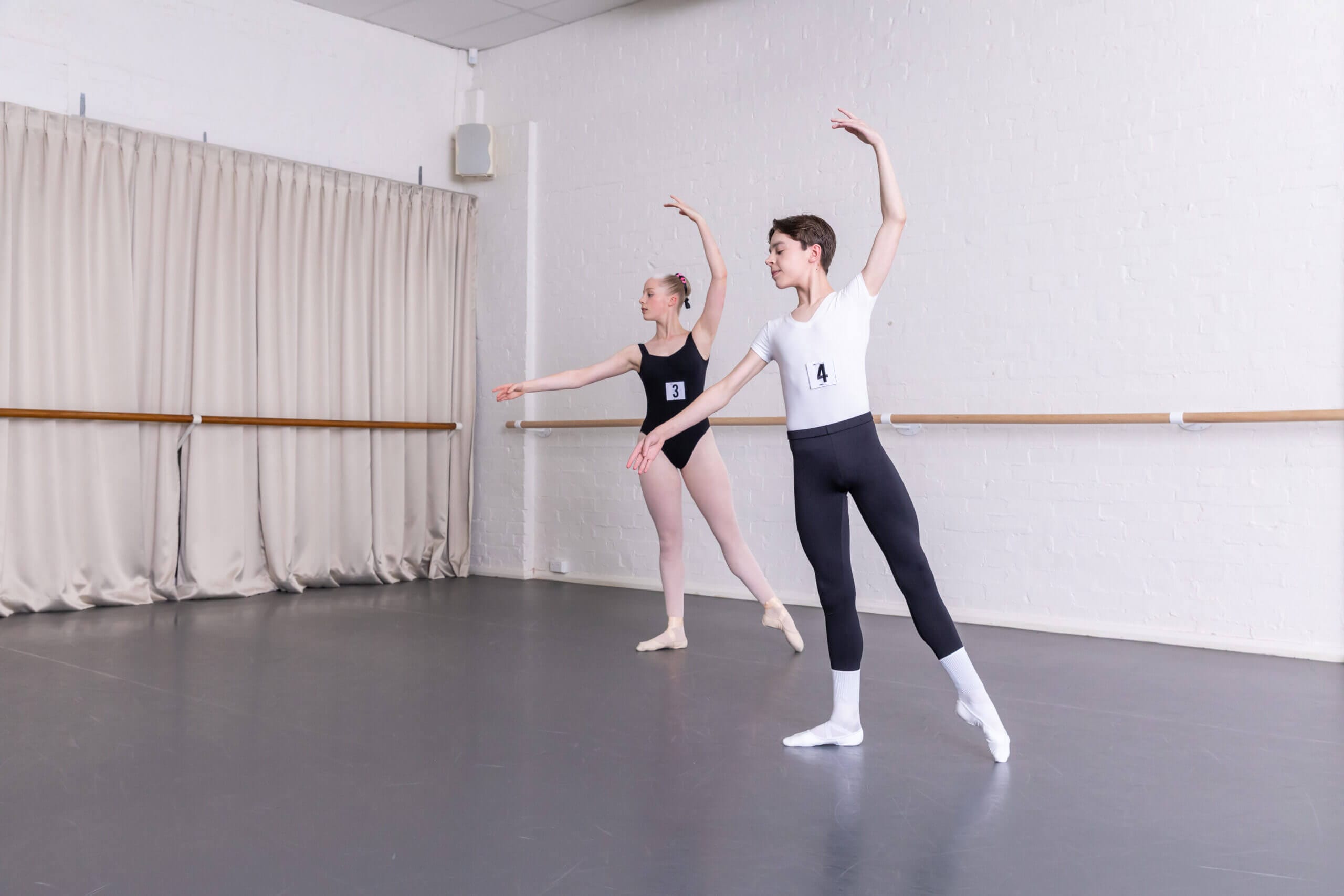
What to wear
In our specifications, uniform is recommended for each grade, but where this is not possible, suitable alternatives may be worn.
Candidates are not assessed based on their uniform.
- All uniform should be clean and well-fitting.
- Jewellery should not be worn unless required for religious or cultural reasons.
- Where used, makeup should be kept light and to a minimum.
- Hair should be neat and tidy, styled off the face and neck so that the line of the head and neck is not obscured.
We want to ensure that candidates feel comfortable and secure in their exam. If you have any queries about uniform, or wish to talk about any adjustments, please do get in touch.
RAD New Zealand Shop stocks a range of recommended exam uniforms.
Online Entries
Filmed exams were introduced to offer an alternative for teachers and students wishing to enter exams during the COVID-19 global pandemic when live exams were not possible.
Filming of exams will continue to be offered. If you wish to film your exams please contact info@rad.org.nz
More information can also be found in the Members’ Area
Submitting your filmed exams
We use secure video hosting platform Planet eStream to administer filmed exams.
Once a discussion has been had with the RAD NZ Office and agreement to proceed with filmed exams has been given, a secure login and password for Planet eStream will be arranged for you.
Happy to help
If can’t find what you are looking for, get in touch:
Contact us at exams@rad.org.uk, or alternatively, you can view further exam information in the Member’s Area.
Become an RAD Registered Teacher
Only RAD Registered Teachers (RAD RTS) are eligible to enter students for our exams.
To enrol your students and better prepare them for success, visit our Member’s Area for more resources.
Not a registered teacher? Sign up and become a member today, and help your students succeed on their dance journey.